Run a team of agents for better data insights
Warp gives data teams agents that investigate metrics, automate recurring analysis, and run directly in your warehouse and pipelines so you can move faster without sacrificing precision.
Trusted by over 800,000 developers and thousands of engineering teams at leading companies


























Move faster. Without sacrificing precision.
Fully auditable workflows.
Every query, transformation, and decision is logged and reproducible so you can inspect the reasoning behind each result.
Human-approved changes.
Agents investigate and propose fixes, but you review diffs, approve changes, and stay in control.
Fluent in your data stack.
Run SQL, Python, and CLI tools directly in your warehouse and pipelines with production-ready outputs.
Example prompts
Prompt
Diagnose experiment results
Prompt
Automate a recurring analysis
Prompt
Run cohort analysis
Prompt
Generate production-ready analysis artifacts
Prompt
Investigate a metric regression
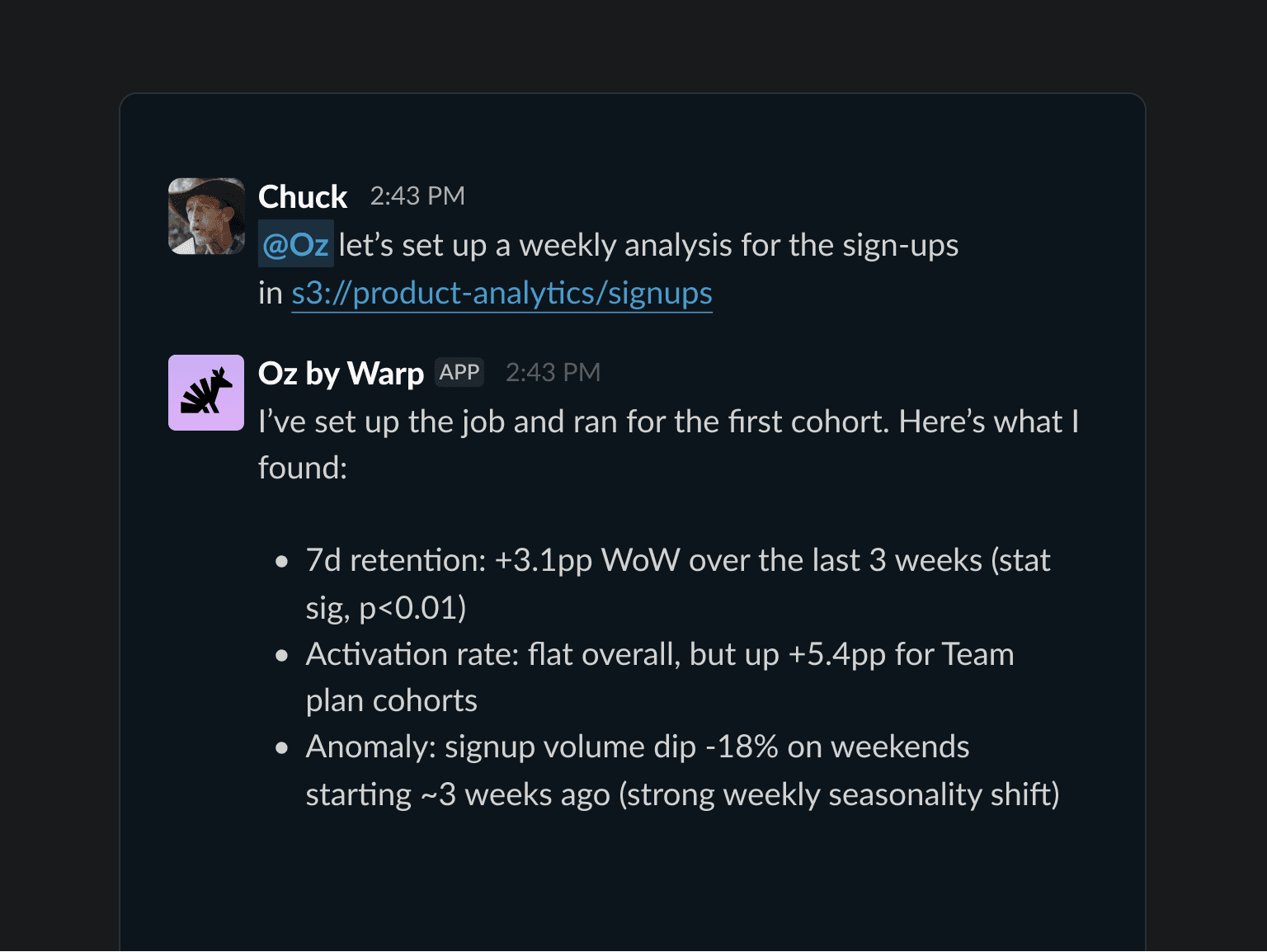
Turn requests into repeatable workflows
Trigger agents from Slack or data events to run analyses, summarize findings, and ship updates on schedule.
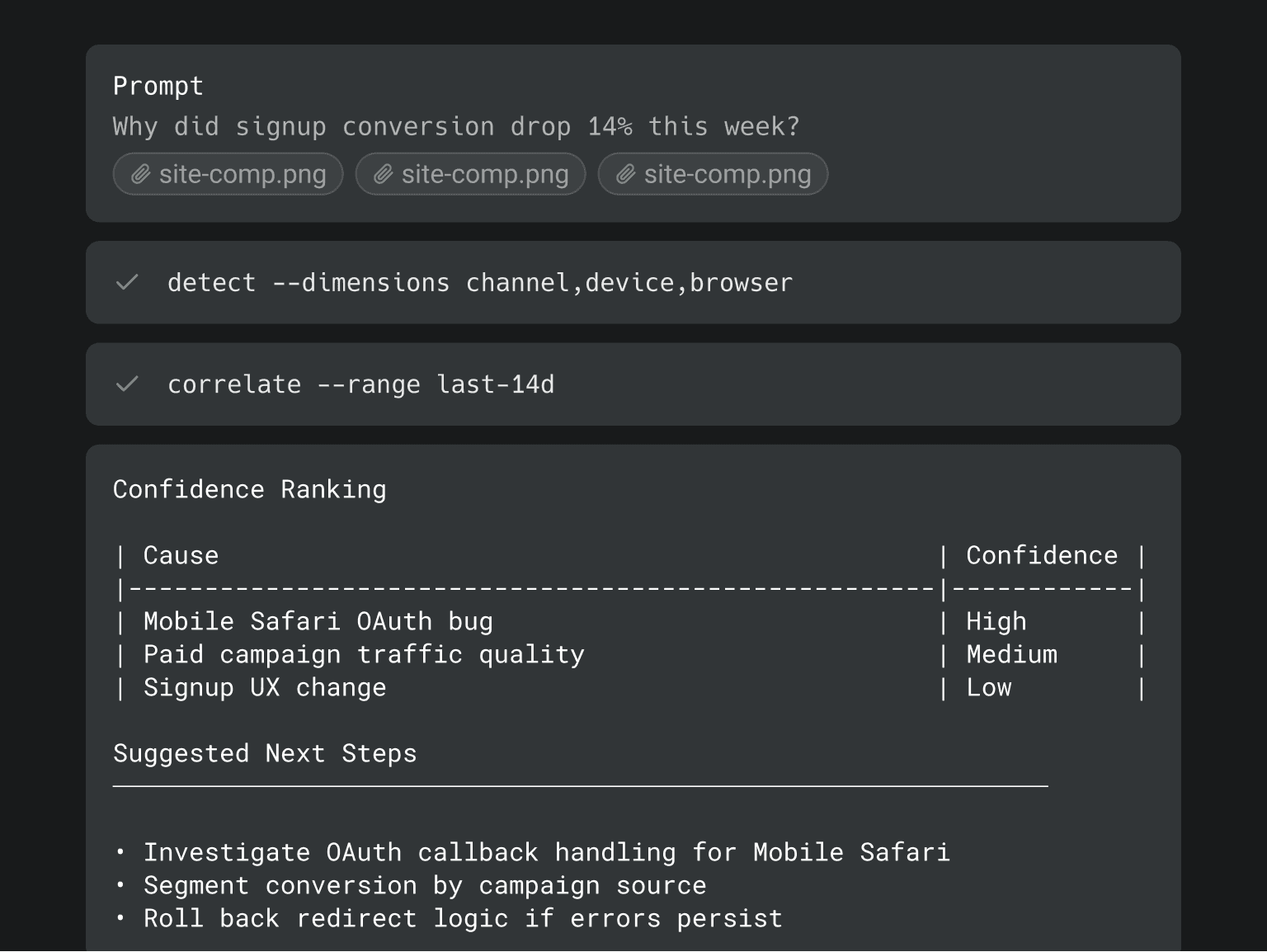
Investigate anomalies automatically
Detect unusual drops or spikes, surface likely drivers, and compile the next steps for your team.
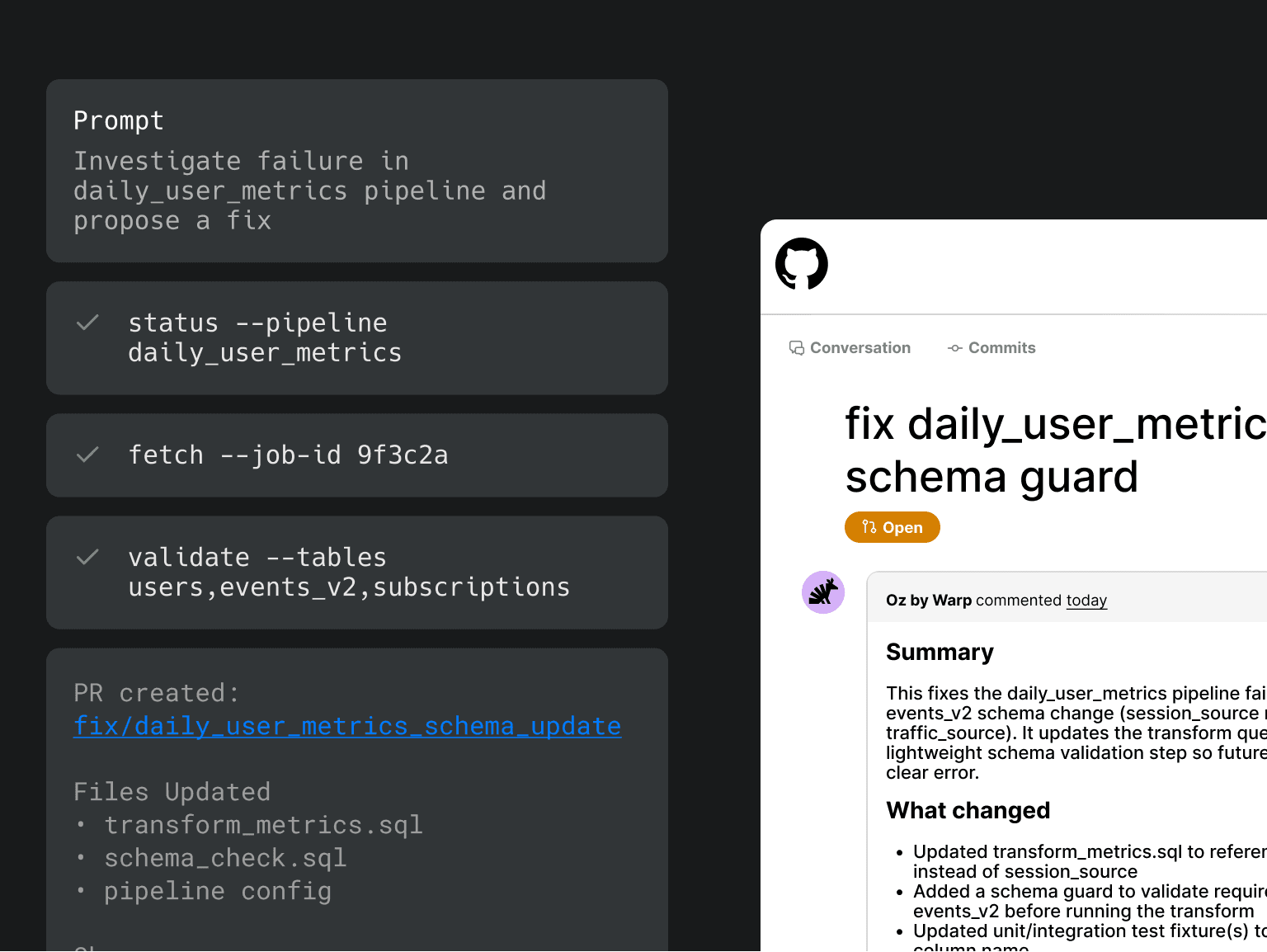
Let agents debug your data pipelines
When a pipeline fails, agents inspect logs, validate schemas, and open a draft fix with a PR summary.
Built for Data Scientists and Analysts
Exploratory Analysis
40–60% fasterWrite and refine SQL manually, switch between tools, and debug syntax and dependencies.
Ask questions in plain English and auto-generate optimized SQL or Python answers.
Recurring Reporting
40–60% fasterRebuild notebooks or refresh dashboards manually each week.
Schedule agents to run analyses automatically and deliver summaries on time.
Experiment Validation
50–70% fasterManually calculate significance, update sheets, and debate interpretation in meetings.
Agents compute statistical impact, detect drift, and recommend next tests.
Pipeline Debugging
30–40% fasterManually trace transformations, inspect logs, and validate schema changes.
Agents surface errors, propose fixes, and generate reproducible validation commands.
